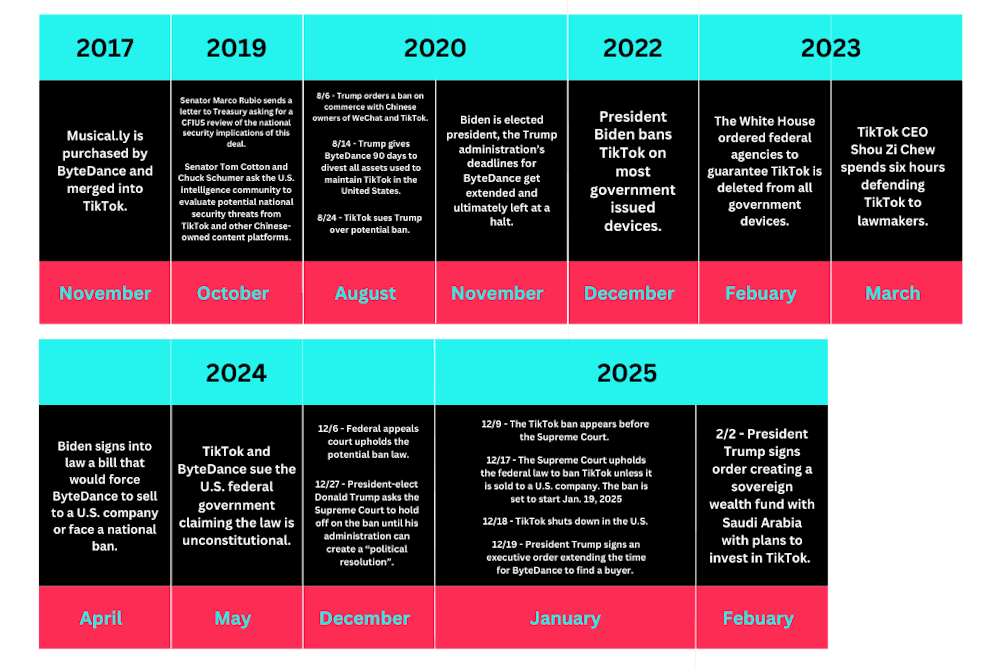


The air in Washington, D.C., felt cold and tense; just like the political debate surrounding TikTok. It was late January 2025, and the fight over the popular app had turned into a major power struggle.
With about 170 million users in the United States, TikTok had become both a huge prize and a big concern.
Time had run out under a national security law, forcing the government to come up with a complicated solution to address fears about Chinese control. The White House, backed strongly by President Trump’s administration, called the deal a success. Officials said American user data was now safe. All sensitive information was being stored on U.S. servers controlled by tech company Oracle. Its founder, Larry Ellison, quietly became an important figure in making the deal happen.
The All-Powerful Algorithm
But the biggest fight wasn’t just about data. It was about TikTok’s algorithm—the data-gathering “brain” that decides what videos people see. That system was originally created by TikTok’s parent company – ByteDance, in China.
Under the deal, Oracle was supposed to monitor and retrain the algorithm to prevent foreign influence, like spreading propaganda or hiding certain viewpoints from teens and other users.
Instead of calming concerns, the deal caused even more debate. Civil rights groups and tech experts warned that this move could be dangerous for free speech. They worried that too much power was now in the hands of a few American companies with close political ties. Rumors even suggested that media mogul Rupert Murdoch was involved, raising fears that TikTok might just be switching one powerful influence for another.
Control Over What We See
Many critics also pointed to apps like Facebook and Instagram. They asked why TikTok was singled out when U.S.-based platforms collect huge amounts of user data without the same level of government attention. Some worried that protecting the algorithm could lead to political control, where certain ideas are boosted while others are quietly pushed aside.
The focus had changed. This was no longer just about keeping China out. It was about who in America now controlled what millions of people see online.
As January’s cold settled in, the country faced an uneasy pause in the battle over who controls the digital public square. Ultimately, Trump signed an order allowing Oracle to house all U.S. content on its servers, and so – for now – your TikTok posts are safe.