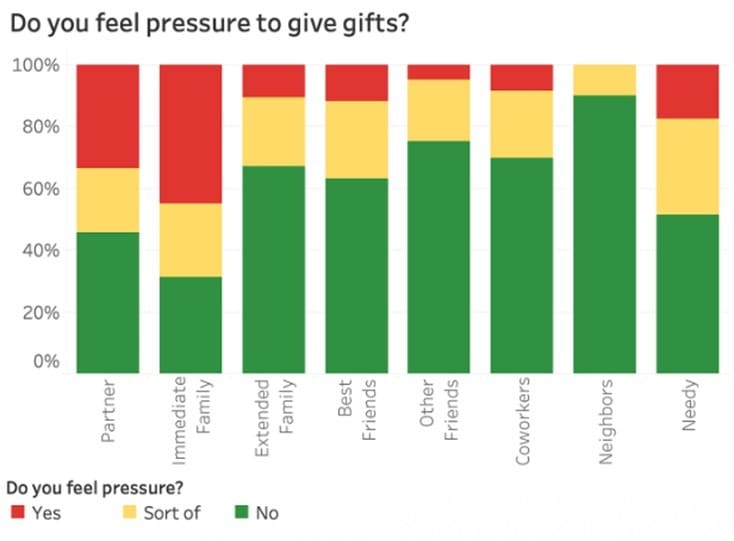
As the holiday season approaches, creativity begins to flourish, as does stress for Christmas gifts.
Gift-giving has always been an honest reflection of your perception of who you are giving your gifts to. It shows if you care, if you understand that person. When being on the receiving end, gifts show you what that person thinks of you and whether you truly know you. Some people prefer being on the receiving end of gift-giving because they want to feel special, and those on the gift-giving end may just want to show their appreciation. The holidays are usually the traditional time to give and receive that appreciation.
Money Wasted
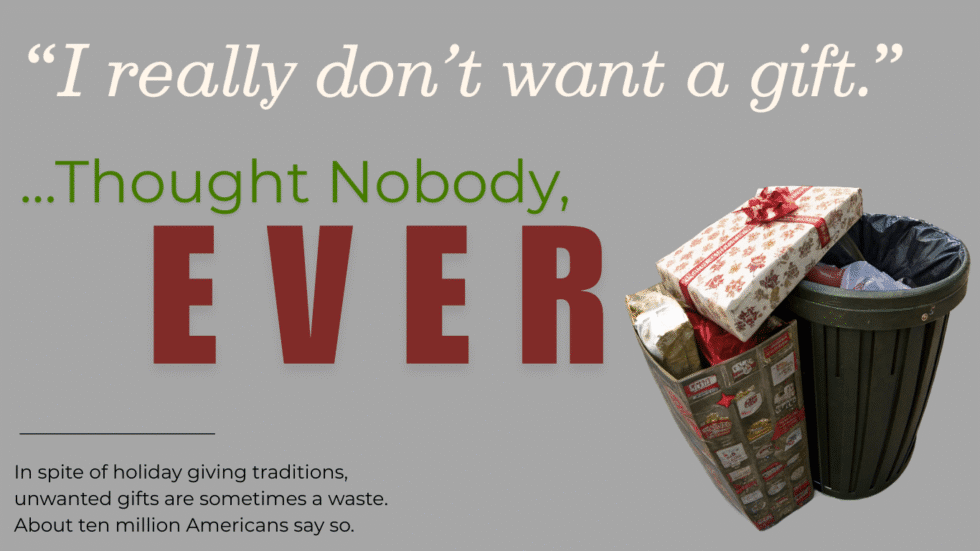
Lets be honest. Everyone loves to receive gifts even if they do not really like to admit it. The only problem is that sometimes gift-giving gets out of hand and people end up getting unwanted gifts.
According to, GiftAFeeling.com’s gift-giving statistics for 2024, in the United States, around. $9.5 billion dollars was wasted last year on unwanted gifts by Americans. This makes gift shopping hard as people receive gifts that they do not want and end up returning.
A returned gift can give the act of exchanging gifts a bad reputation. But if you don’t participate in the gift exchange, you might be seen as ungrateful.
In GiftAFeeling’s statistics, researchers found that 21% of men and 8% of women intentionally buy “bad gifts,” which can somewhat dim one’s holiday spirit. Yes. they admit they do it on purpose.
Since holiday gifts are supposed to be a symbol of our appreciation and love for one another you, you wouldn’t want to give something that you wouldn’t like or intentionally buy for yourself. Would you?
In December of 2022, The American Psychological Association (APA) did an experiment to see if the old theory,” giving is better than receiving” was true.
Researchers gave fifty people $100 and told half of them to spend it on themselves, and the other half to spend it on someone else over four weeks. Then, they performed functional magnetic resonance imaging (fMRI) to measure activity in the brain associated with generosity and pleasure during a social task.
They found that those who spent money on other people had more generous and fair interactions with other people and had higher levels of happiness after the experiment was over. This highlights the different emotions that come with gift-giving and how it really can just be a slippery slope.
More Meaning, Less Pressure
In the end, gift-giving and receiving gifts come with a variety of emotions, expectations, and challenges. While receiving can make someone feel joy and excitement, it can lead to stressful situations. However, what matters most is the understanding of the intention behind the gift.
Whether someone prefers to give or receive, the act of exchanging gifts is ultimately meant to strengthen and connect relationships and express care. When people focus more on the meaning and less on the pressure, gift-giving, especially during the holiday season, can become a more positive and genuine experience for everyone.
With this, I hope your understanding of your own perspective when it comes to gift-giving has been enlightened to become more understanding and to not focus on money or cost, but what is within the heart.